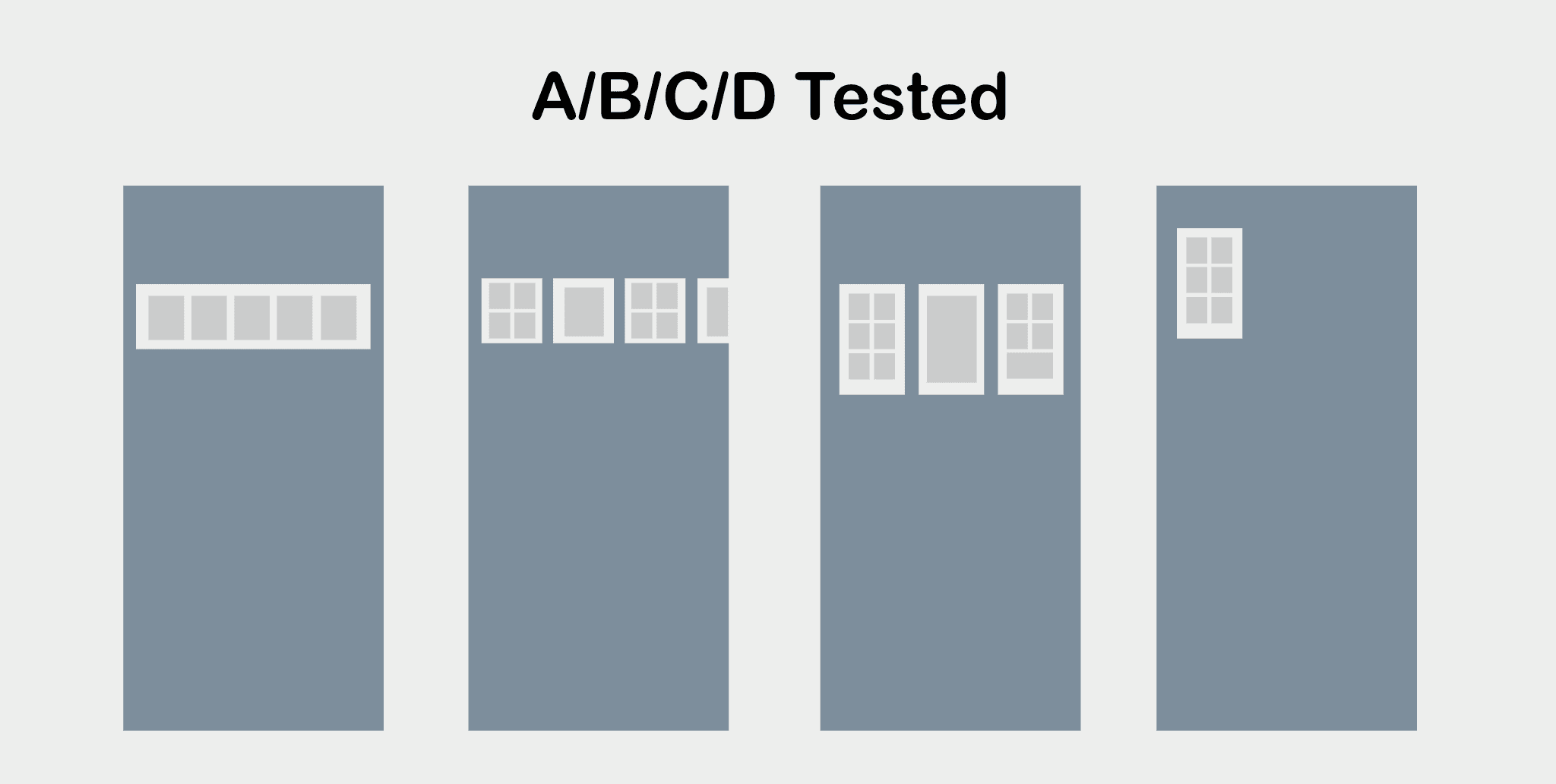
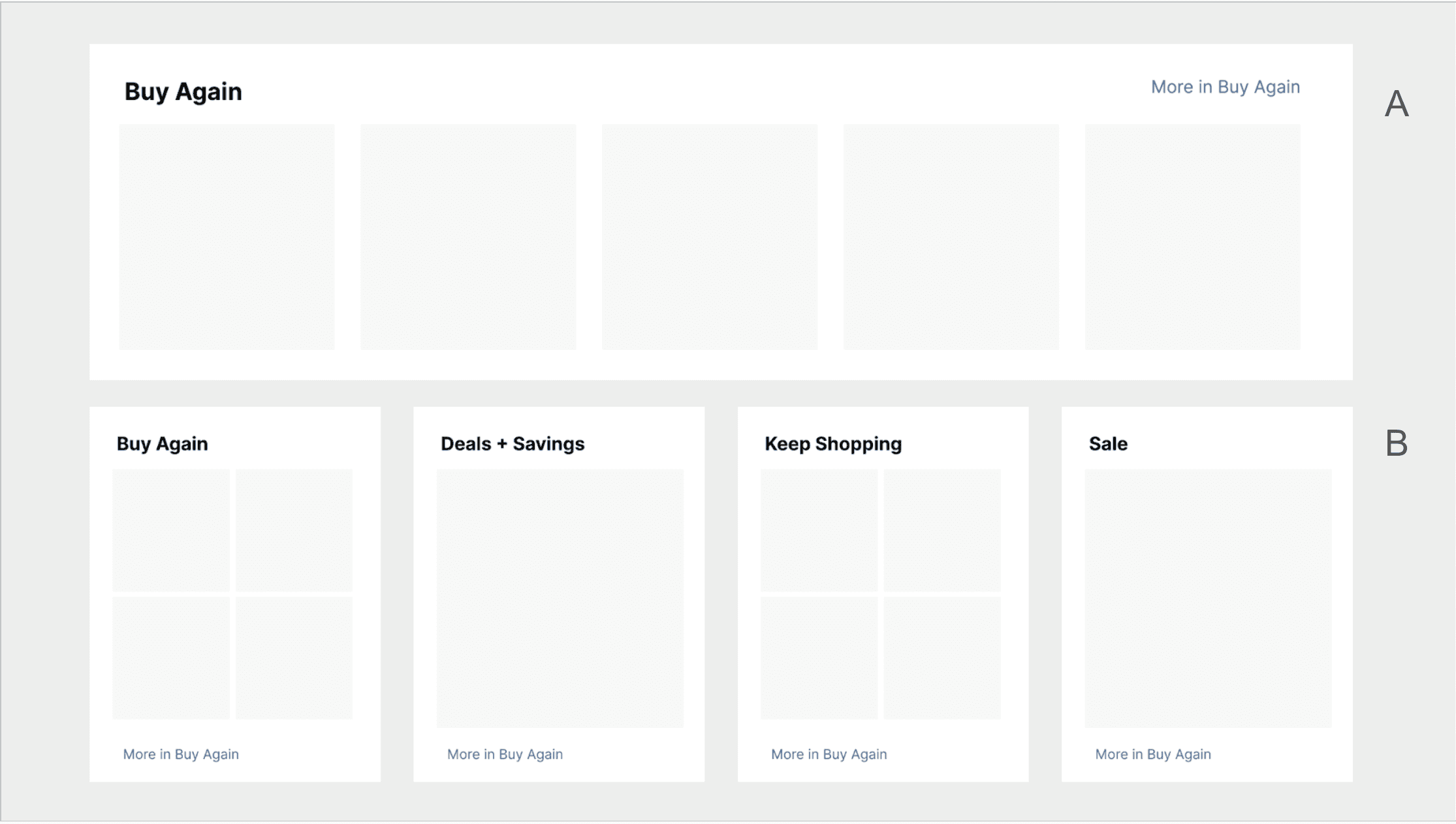
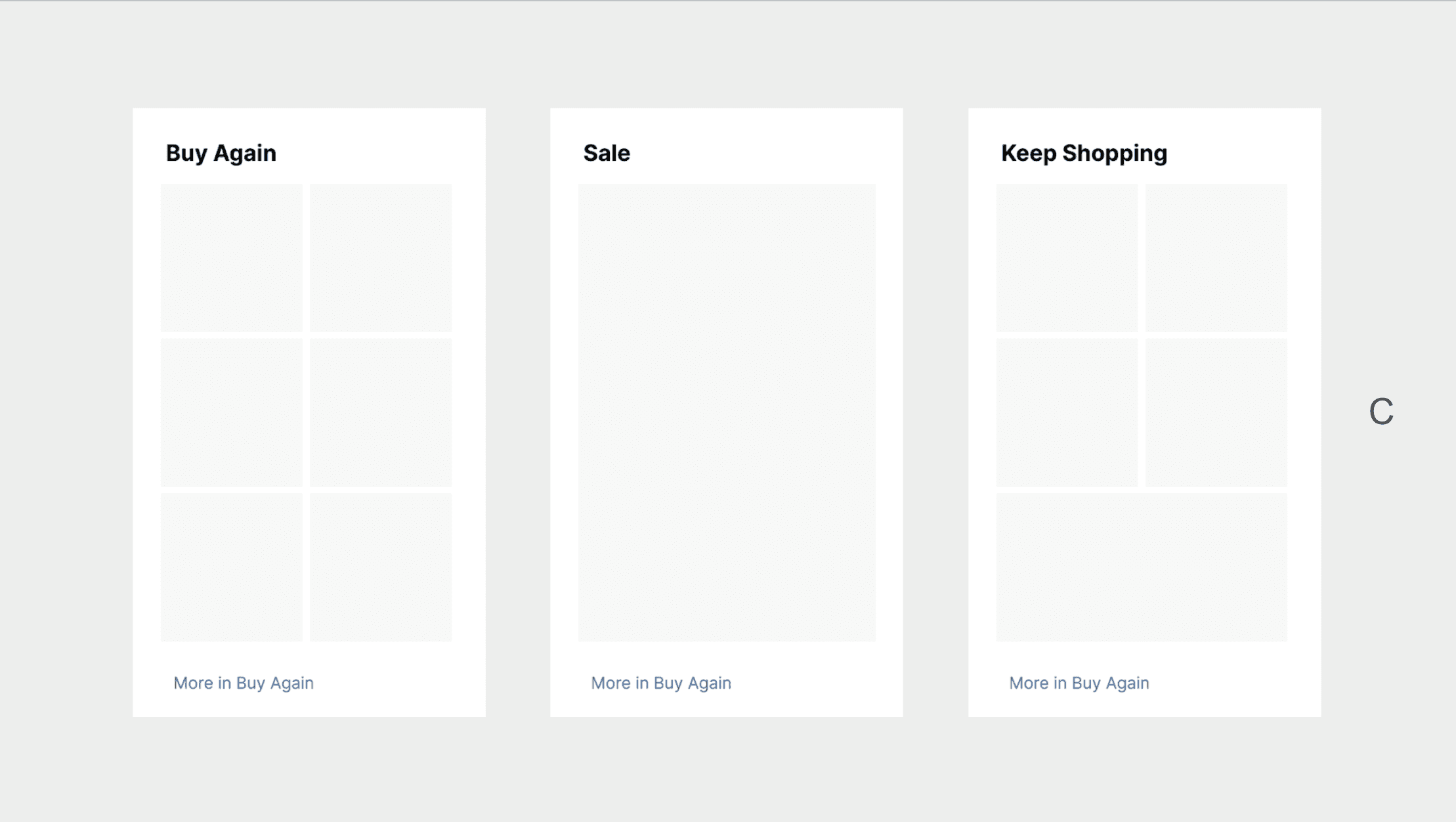
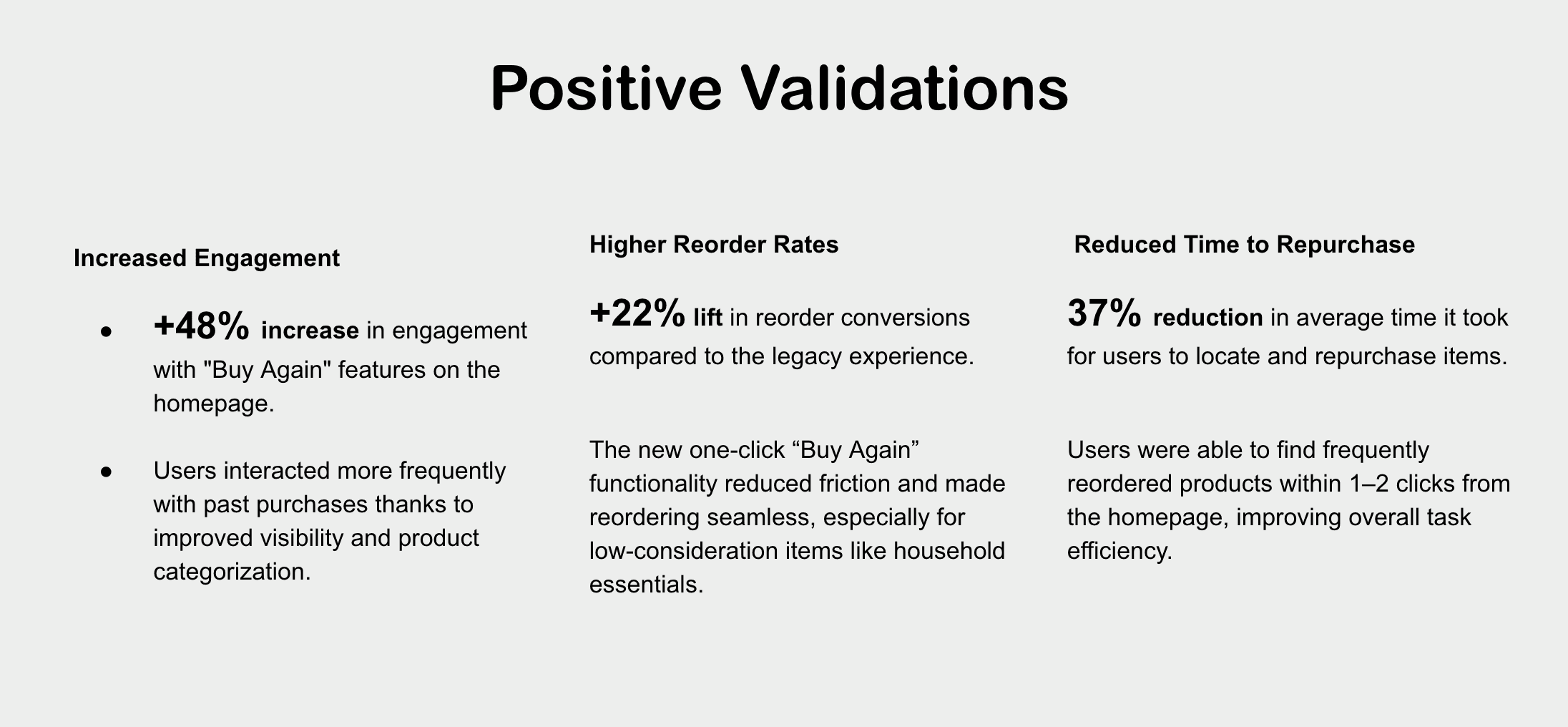
Led a team of designers and a handful of feature iterations. The primary goal of the Buy Again Hub was to streamline repeat purchasing behavior by offering customers a quick, personalized view of items they are most likely to repurchase. This initiative aimed to enhance convenience, increase user retention, and boost repeat sales—all while reducing the cognitive load on users. By transforming reordering from a multi-step search process into a frictionless, one-click experience, Amazon sought to build habitual shopping behaviors that reinforced its position as the go-to platform for everyday needs.
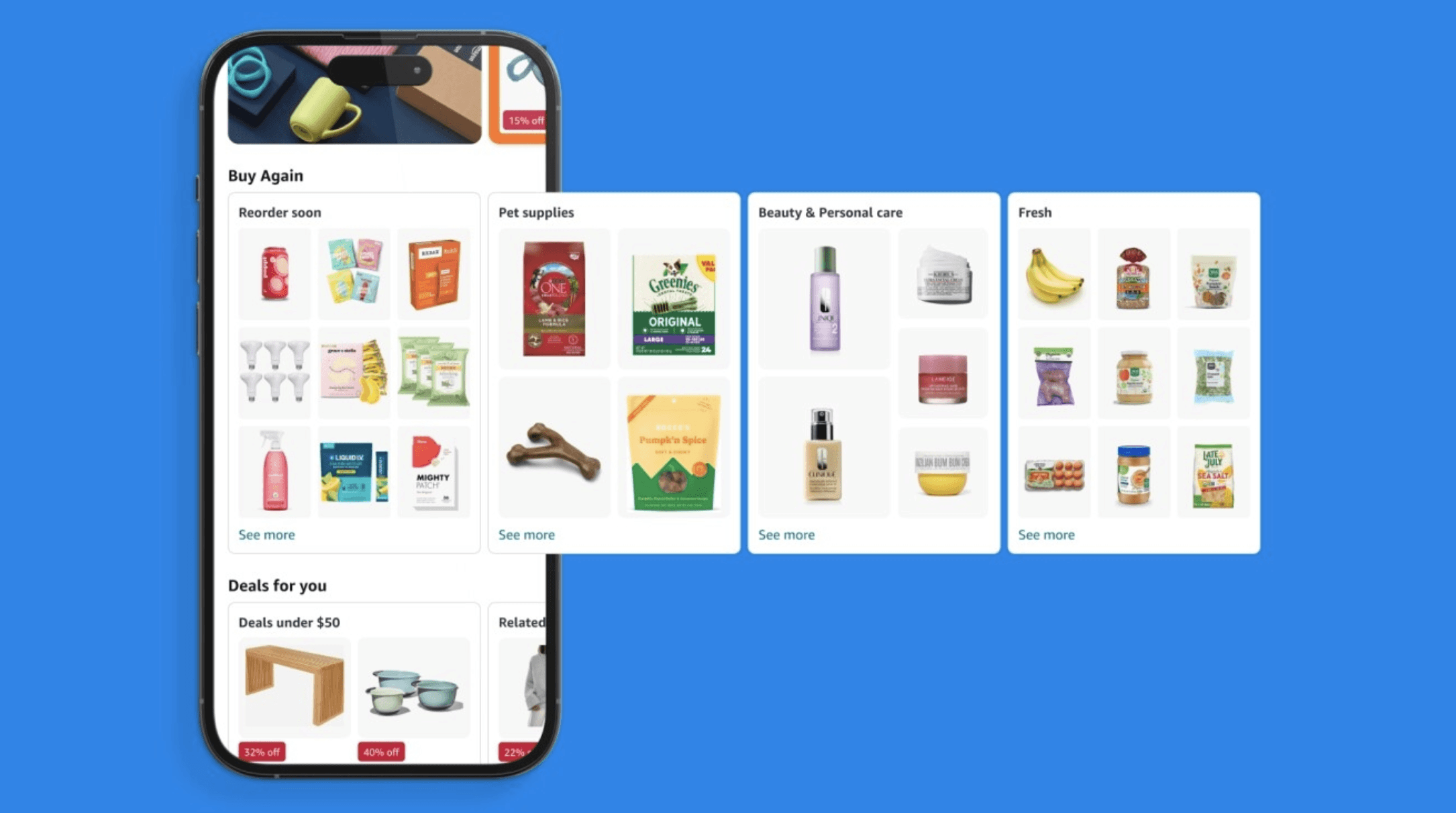
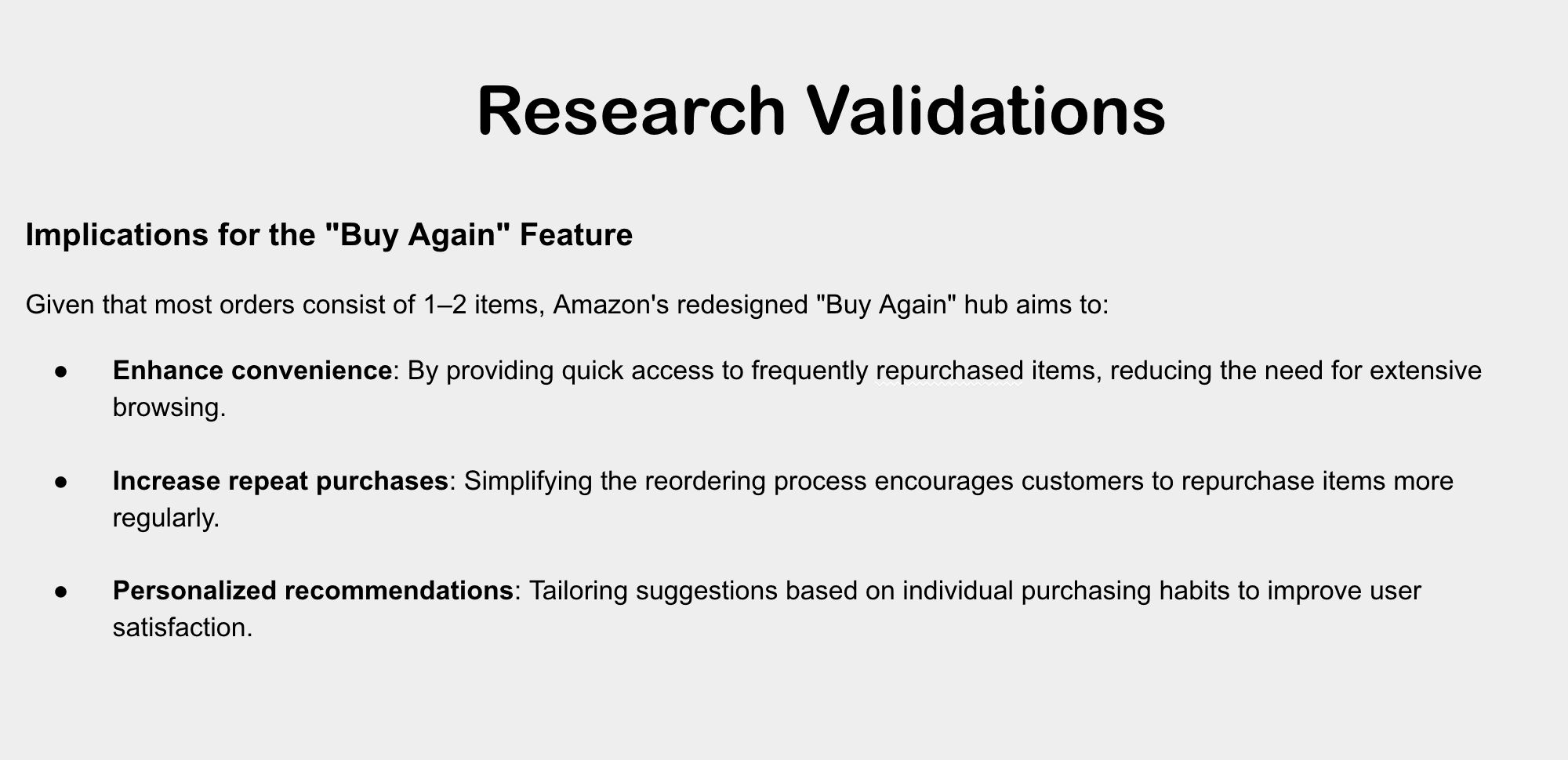
The Amazon Buy Again Hub was designed as a dedicated interface for simplifying the reordering process for customers who regularly purchase consumable or repeat-use products. By centralizing past purchases and surfacing frequently reordered items, Amazon reduced friction in the customer journey and increased convenience. The interface emphasized speed, personalization, and predictability, which aligned with Amazon’s broader goal of making purchasing effortless and habitual.
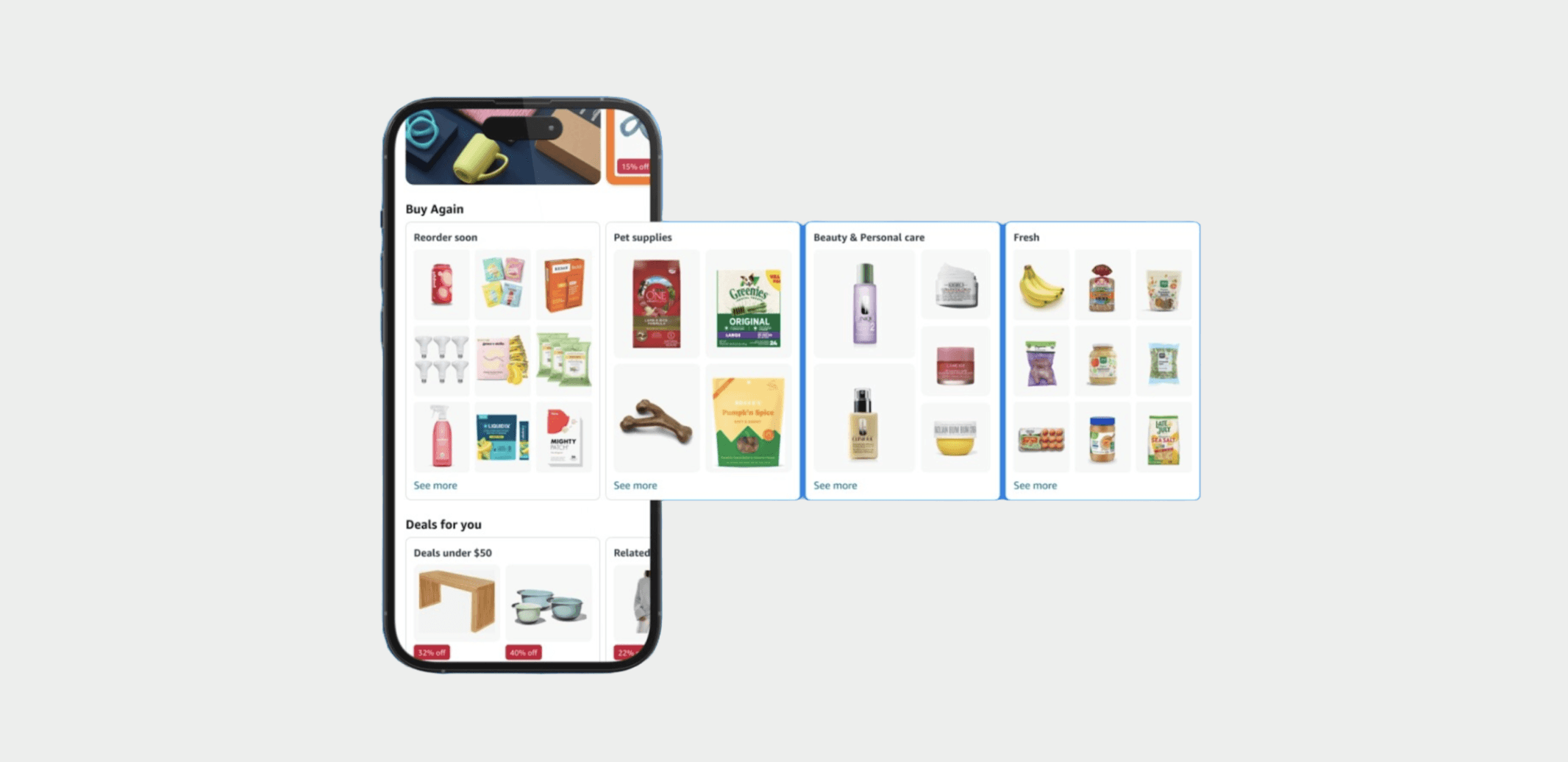
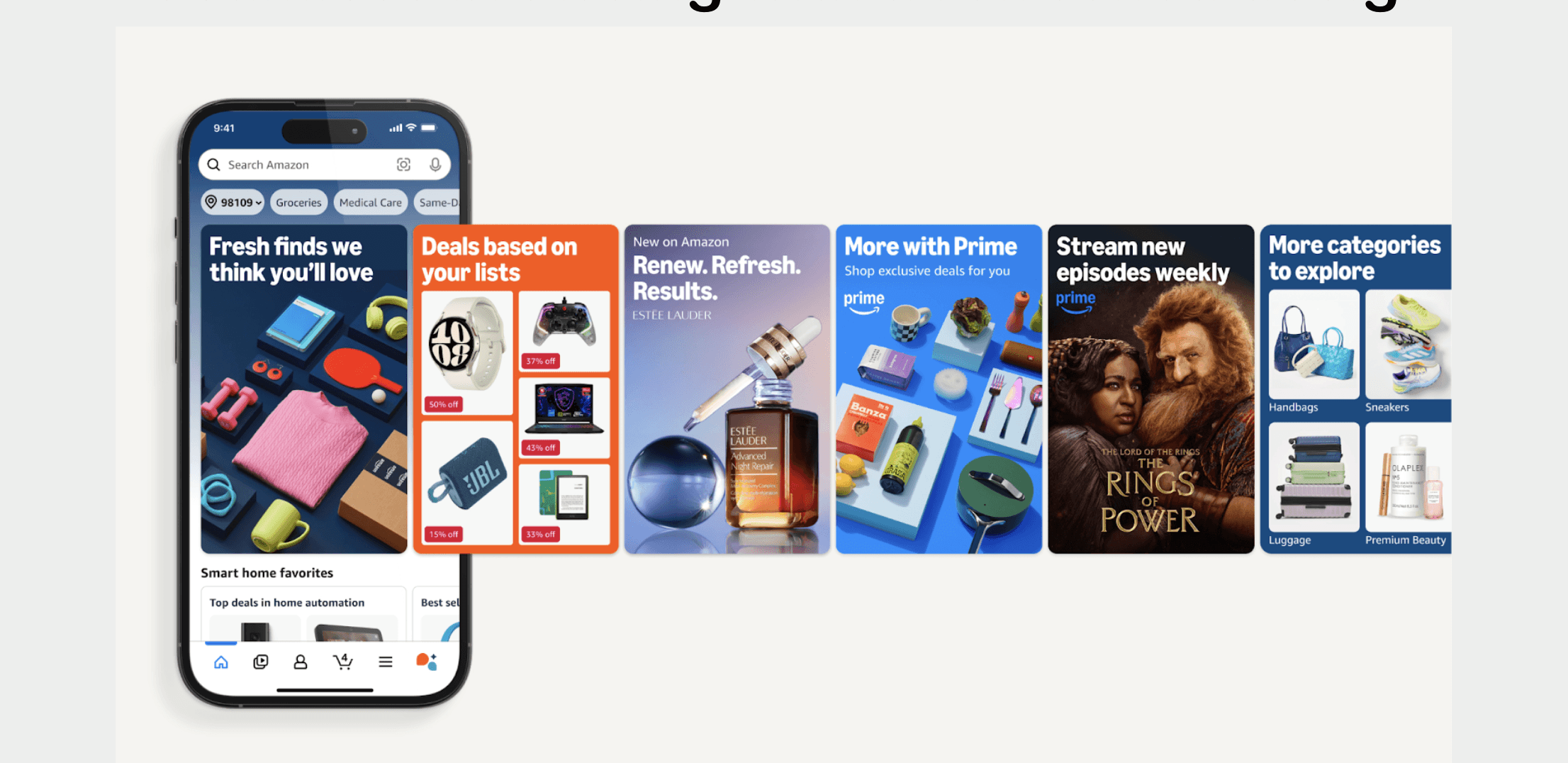
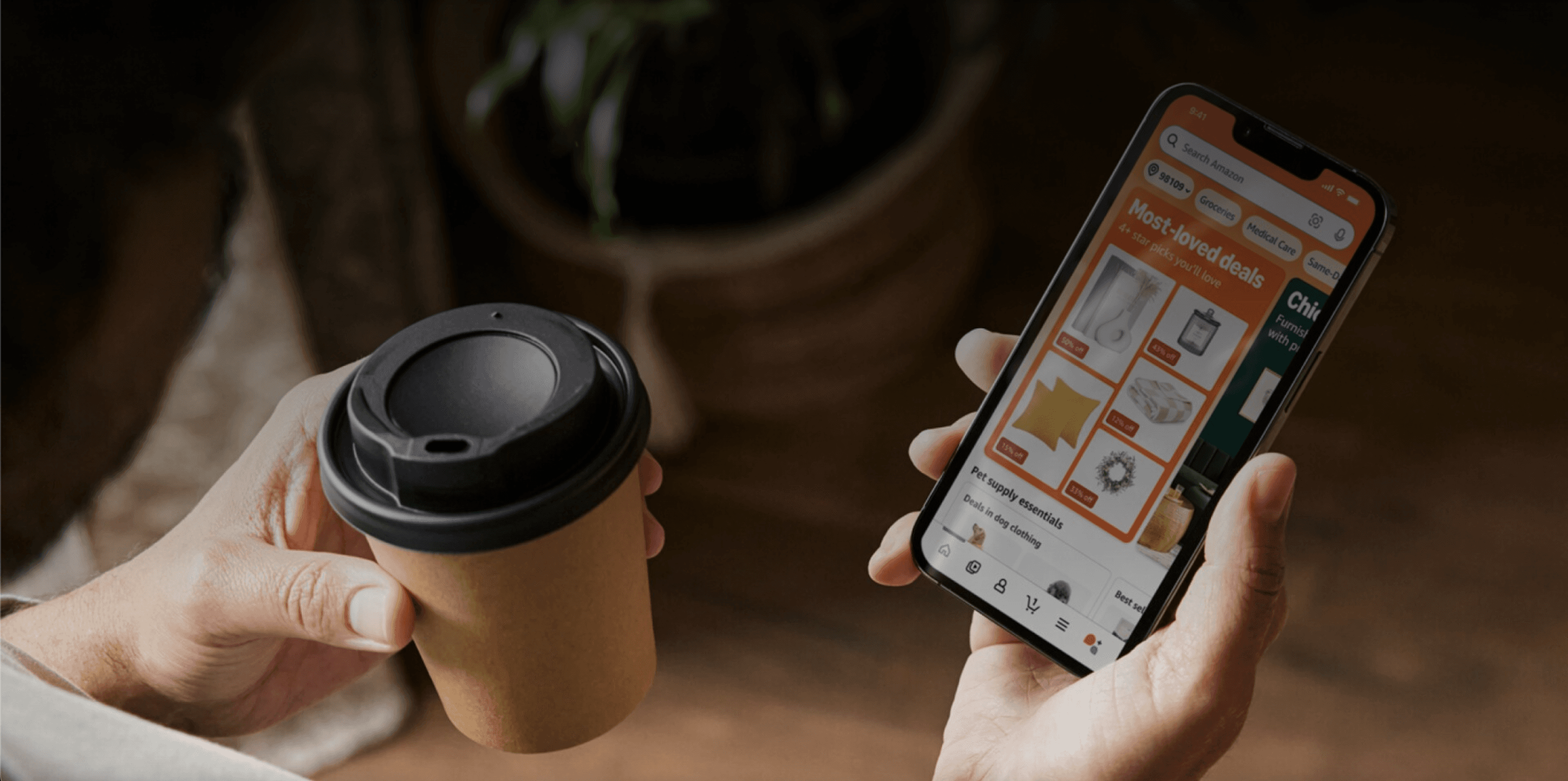
Buying frequently purchased items just got easier as well with the homepage Buy Again hub. The Buy Again hub consolidates frequently purchased items into one location, making it even more convenient to complete common shopping tasks. With a single tap, customers can quickly add to their go-to products and discover complementary items.
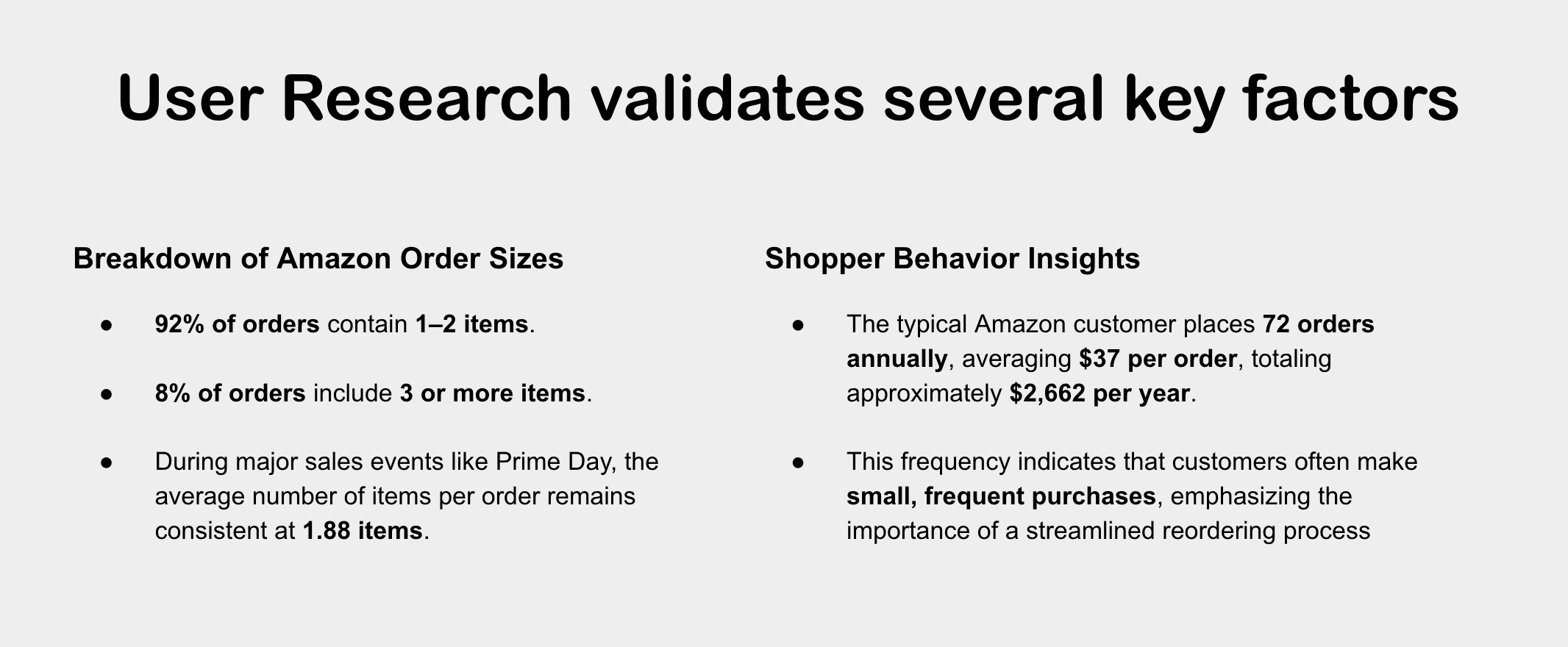
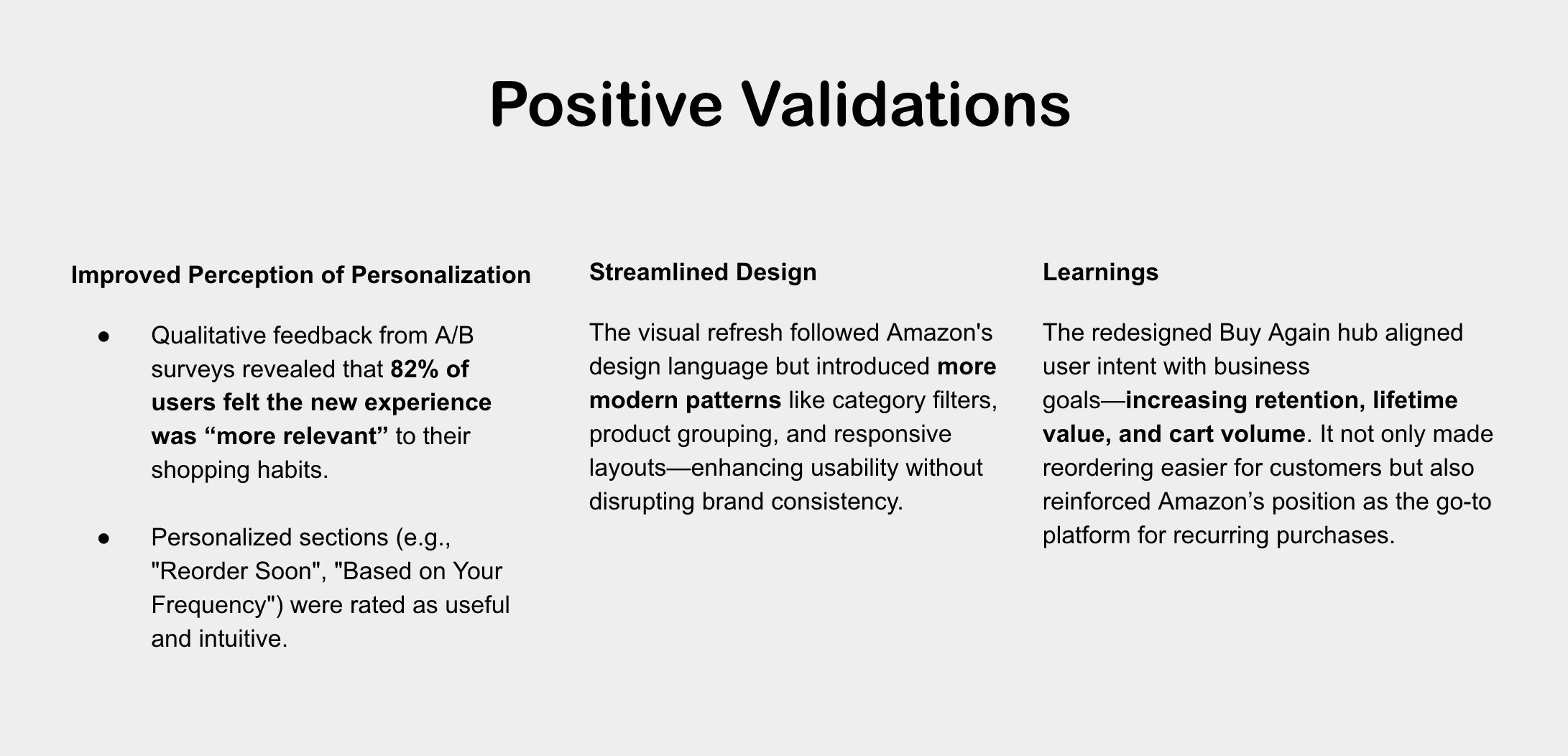
From a UX perspective, the hub applied familiar3e-commerce patterns like product thumbnails, past order timestamps, and one-click reorder buttons. Intelligent sorting based on frequency, recency, and subscription status created a tailored experience, enhancing relevance for users. The layout was optimized for both desktop and mobile, enabling users to find and reorder items with minimal interaction. Behavioral data informed the design, ensuring the most valuable items were presented up front.
On the business side, the Buy Again Hub served as a strategic growth lever, driving customer retention, boosting lifetime value (LTV), and increasing frequency of purchases. It catered particularly well to high-frequency verticals such as household goods, groceries, and personal care. By reinforcing customer loyalty through convenience, Amazon further locked in Prime members and encouraged a habit loop, supporting long-term revenue growth without aggressive promotional tactics.
Challenge
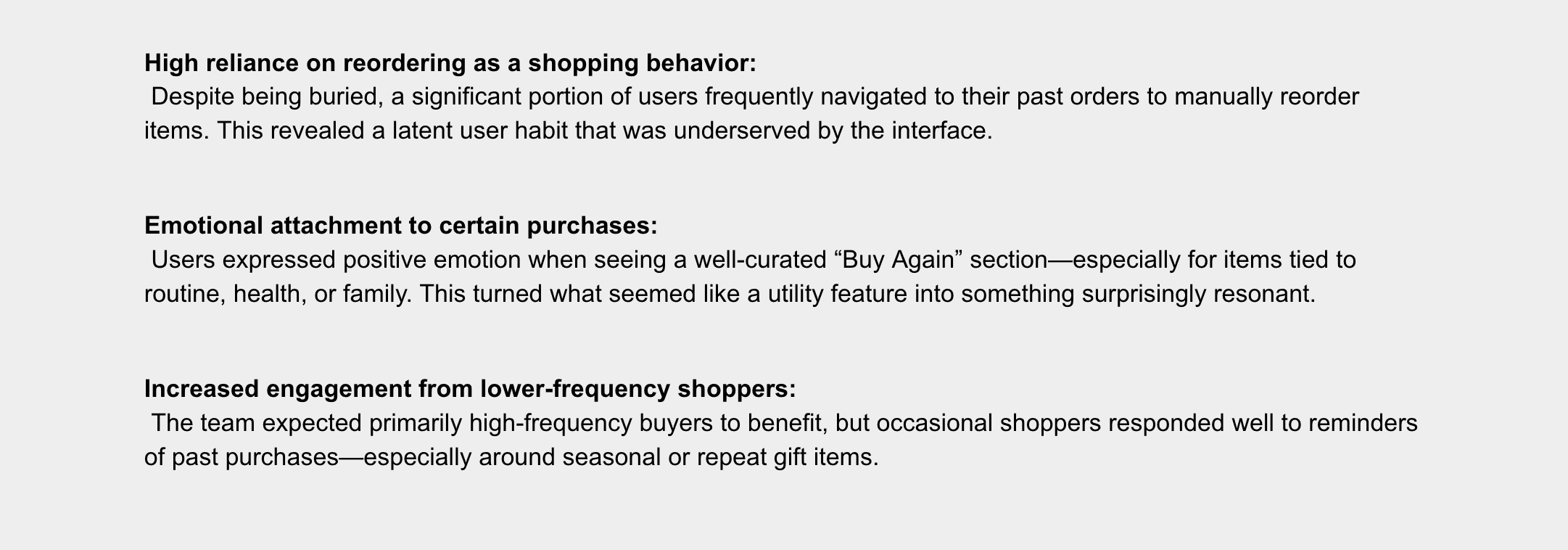
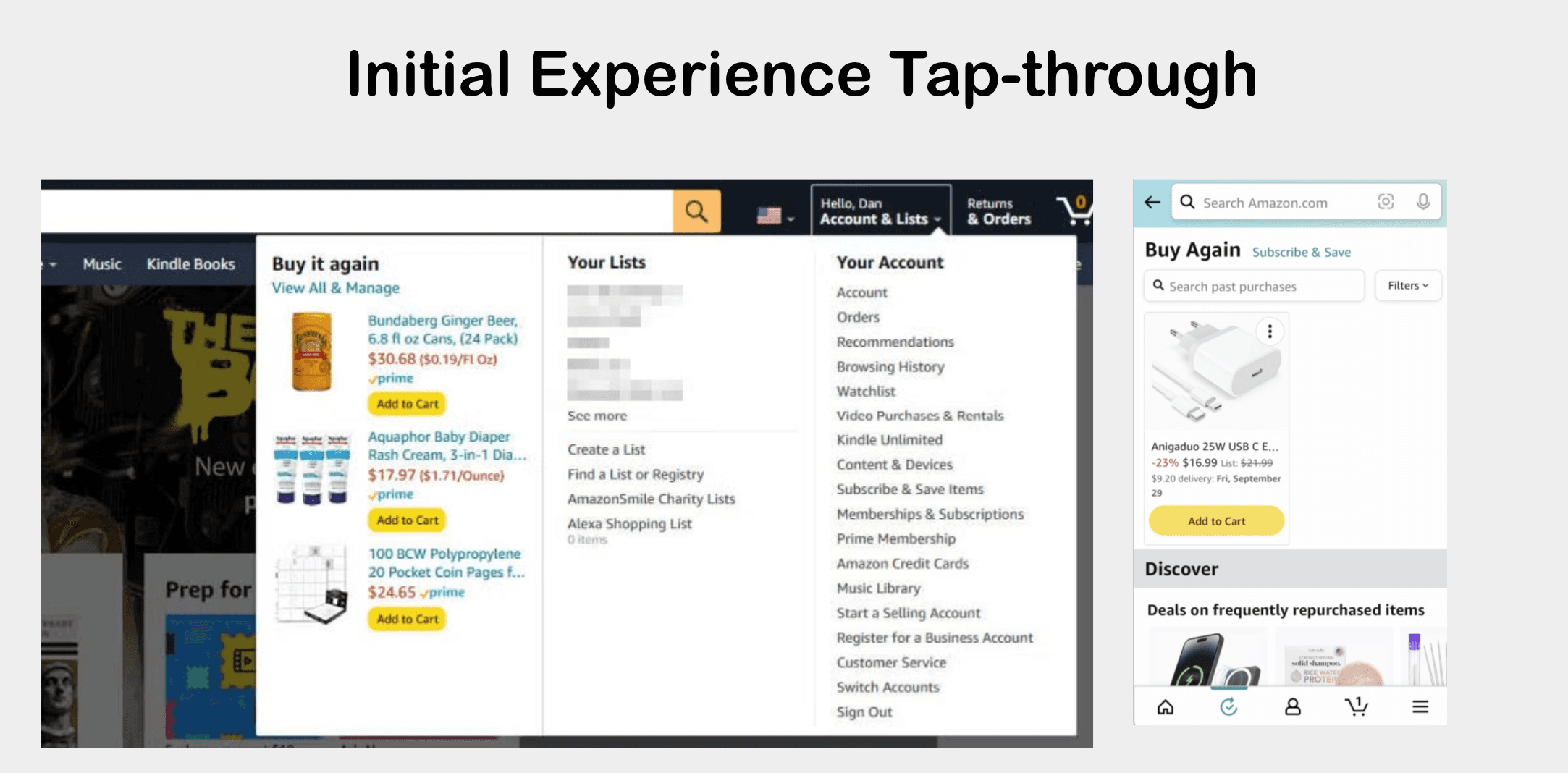
Customers who frequently reorder products on Amazon face friction due to the lack of a centralized, easily discoverable "Buy Again" feature. Currently, users must navigate through their order history or search manually to find previously purchased items. This fragmented experience increases cognitive load and time-to-task, leading to frustration and potential drop-off.
The experience fails to support habitual, efficiency-driven shopping behaviors—especially for routine purchases like household essentials or personal care products.
We need to design a solution that surfaces relevant, repurchasable items in a more visible, intuitive, and personalized way—reducing effort and improving satisfaction for repeat buyers.
User goal: Easily find and reorder frequently purchased items.
Business goal: Increase reorder rates, retention, and LTV (lifetime value).
Research pain points
1. Limited Visibility and Accessibility
Deep Navigation Required: Users had to navigate through multiple steps, such as accessing their order history, to find the "Buy Again" option.
Inconsistent Placement: The feature's location varied across platforms, leading to confusion and reduced usage.
2. Lack of Personalization
Generic Recommendations: The system did not adequately tailor suggestions based on individual user behavior, resulting in irrelevant product recommendations.
3. Potential for Unintentional Orders
Automatic Reordering Risks: Users could inadvertently reorder items they no longer needed, leading to unnecessary expenses.
4. Price Variability Concerns
Price Changes Not Highlighted: The feature did not alert users to price increases or decreases since their last purchase, potentially leading to unexpected costs.
5. Product Availability Issues
Out-of-Stock Items: Previously purchased items might be unavailable or discontinued, yet still appeared in the "Buy Again" list, causing frustration.
6. Confusion Over Product Conditions
Used vs. New Items: There was ambiguity in distinguishing between new and used items, leading to unintended purchases and returns.
7. Missed Promotions and Deals
One-Time Offers Not Reapplied: Users could miss out on previous promotions or deals when reordering, as these were not always available or highlighted.